
Spring (September to November)
The most popular season. Tulips, ranunculus, freesia, sweet peas and stock fill the market, and peonies arrive in late spring for a few short weeks. Spring flowers are soft and short-lived, so they suit a gift for a few days rather than a vase for a fortnight.
Summer (December to February)
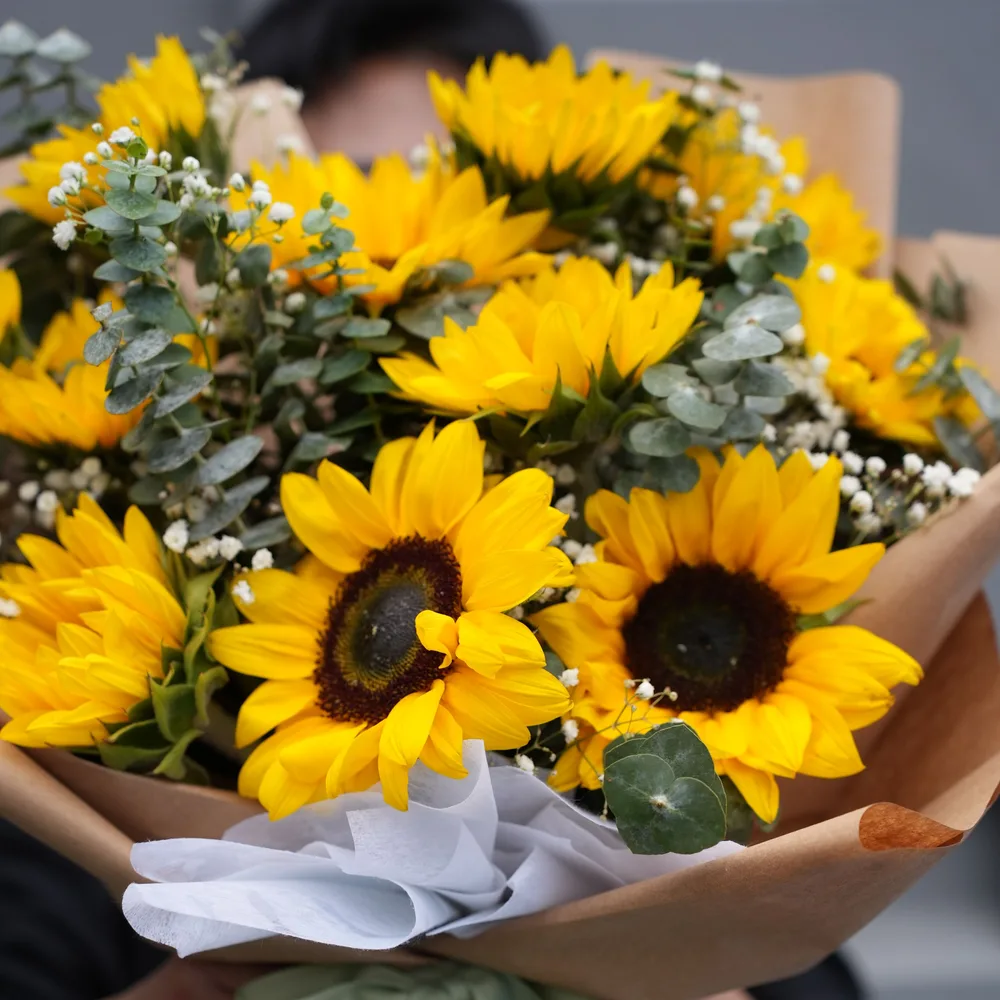
Sunflowers, hydrangeas, gerberas, delphinium and zinnias are at their best, and dahlias begin in the new year. Heat shortens the life of a bouquet, so keep the vase cool and change the water often.
Autumn (March to May)
Dahlias are at their peak, with chrysanthemums, snapdragons and the first of the native flowers. Autumn colour is warm and rich: burgundy, rust, orange and gold. It is a good time for long-lasting arrangements.
Winter (June to August)
Anemones, ranunculus, daffodils and jonquils, camellias and proteas. Winter flowers are bold, tight and last well in the cool, and wattle starts to appear as the season turns.
Available all year
Roses, lilies, carnations, alstroemeria, chrysanthemums and gypsophila are grown year-round and always on the market. Everything else varies with the weather and what the growers have that week.
Flowers are subject to seasonal availability, and if a flower in a design is not available our florists will substitute fresh seasonal blooms of equal or higher value in the same colours.
Questions we get asked
Are peonies available all year?
No. Peonies are a short seasonal flower, in Melbourne mostly from late spring into early summer. At other times of year they are rare and expensive.
Which flowers last longest in a vase?
Chrysanthemums, alstroemeria, lilies, carnations and roses are among the longest-lasting, often seven days or more with fresh water.
From the shop
We deliver across Highpoint, Maribyrnong & Melbourne's Western Suburbs, same day when you order by 1pm. Delivery areas and fees.